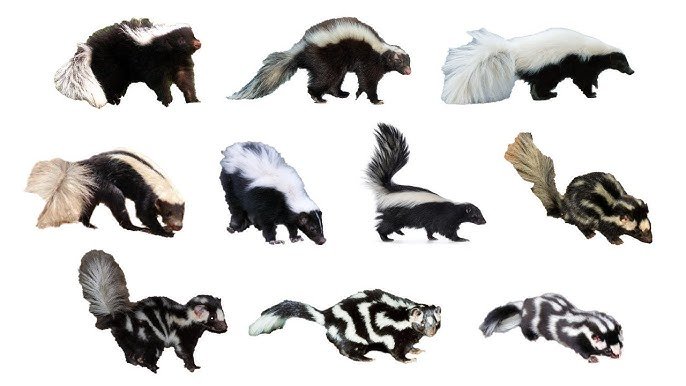
Skunks; fascinating creatures that roam the wild with their distinctive black and white fur, and potent defense mechanism. What are the 12 types of skunks? There are various species that inhabit different regions of the Americas. From the hooded skunk to the spotted skunk, each type possesses unique traits and habitats. Let’s delve deeper into the diverse world of skunks and unravel the mysteries surrounding these intriguing animals.

What Are the 12 Types of Skunks?
Welcome to our skunk appreciation blog! Skunks are fascinating creatures that often get a bad rap because of their strong odor. But did you know that there are actually 12 different types of skunks? In this article, we will explore each of these types in detail, from their physical characteristics to their habitats and behaviors. So, let’s dive in and learn more about these unique and misunderstood animals!
1. Striped Skunk
The striped skunk is the most common type of skunk found in North America. It has distinctive white stripes that run down its back, with a black fur coat. Striped skunks are nocturnal animals that are known for their ability to spray a strong-smelling liquid as a defense mechanism.
2. Spotted Skunk
The spotted skunk is smaller than the striped skunk and has a more scattered pattern of white spots on its fur. It is also more agile and can perform handstands as a warning signal before spraying its foul-smelling liquid. Spotted skunks are adept climbers and can often be found in trees.
3. Hog-nosed Skunk
The hog-nosed skunk, also known as the cone-nosed skunk, has a distinctive pig-like snout and long claws that help it dig for food. This type of skunk is found in the southwestern United States and Mexico. It is known for its gentle disposition and unique foraging behavior.
4. Hooded Skunk
The hooded skunk gets its name from the white “hood” of fur on its head. This skunk is found in Central America and parts of Mexico. The hooded skunk is more solitary compared to other skunk species and has a varied diet that includes insects, small mammals, and plants.
5. Eastern Spotted Skunk
The eastern spotted skunk is a subspecies of the spotted skunk and is found in the eastern United States. It is smaller and has a different spot pattern compared to its western cousin. Like other skunks, the eastern spotted skunk is also known for its defensive spraying behavior.
6. Western Spotted Skunk
Unlike the eastern spotted skunk, the western spotted skunk is found in the western United States and parts of Mexico. This skunk has a more vibrant fur coloration and smaller spots. It is an agile climber and can easily scale trees and other obstacles.
7. Pygmy Spotted Skunk
The pygmy spotted skunk is the smallest type of skunk and is found in Mexico and Central America. It has a distinctive spotted pattern on its fur and is known for its secretive nature. Despite its small size, the pygmy spotted skunk is a skilled hunter.
8. Humboldt’s Hog-nosed Skunk
Humboldt’s hog-nosed skunk is named after the Humboldt Current along the western coast of South America. This skunk has a unique coloration with a black-and-white striped back and a reddish-brown underside. Humboldt’s hog-nosed skunk is primarily nocturnal and feeds on a variety of insects and small animals.
9. American Hog-nosed Skunk
The American hog-nosed skunk is found in the central and southeastern United States. It has a distinctive long snout and sharp claws for digging. This skunk is known for its loud hissing sound when threatened, in addition to its ability to release a pungent odor as a defense mechanism.
10. Molina’s Hog-nosed Skunk
Molina’s hog-nosed skunk is native to Argentina, Chile, and parts of Bolivia. It has a more slender body compared to other skunks and is adapted to the grasslands and forests of South America. Molina’s hog-nosed skunk is an omnivorous species that feeds on a variety of plant matter and small animals.
11. Indonesian Stink Badger
Although not a true skunk, the Indonesian stink badger is often included in discussions about skunk species due to its similar defensive odor. This animal is found in Indonesia and has a black fur coat with white stripes. The Indonesian stink badger is an excellent climber and primarily feeds on insects.
12. Palawan Stink Badger
The Palawan stink badger, also known as the Palawan skunk, is found on the Palawan Island in the Philippines. Like its Indonesian cousin, the Palawan stink badger emits a foul-smelling liquid when threatened. This species is an important part of the island’s ecosystem and plays a role in controlling insect populations.
There you have it – the 12 types of skunks! Each of these skunk species has unique characteristics that make them fascinating creatures to learn about. Whether they are known for their distinctive fur patterns, defensive behaviors, or habitat preferences, skunks play an important role in the ecosystems where they live. Next time you encounter a skunk, remember to appreciate these remarkable animals and their place in the natural world.
Types of Skunks
Frequently Asked Questions
What are the 12 types of skunks?
There are actually only 11 recognized species of skunks worldwide. These species include the striped skunk, hooded skunk, spotted skunk, hog-nosed skunk, and more. Each species has its own unique characteristics and habitat preferences.
How can you differentiate between the different types of skunks?
The various types of skunks can be differentiated based on their size, color patterns, and specific physical features. For example, the striped skunk has prominent white stripes running down its back, while the spotted skunk has distinct spots on its fur.
Do all types of skunks have the same behavior and habits?
While skunks share some common behaviors like spraying a strong-smelling liquid as a defense mechanism, each type of skunk may exhibit slightly different habits based on their environment and evolutionary adaptations. Some may be more nocturnal, while others may be more diurnal.
Final Thoughts
In conclusion, understanding the different types of skunks is crucial for wildlife enthusiasts. The 12 types of skunks include the striped skunk, hooded skunk, and spotted skunk. Each species has unique characteristics and behaviors, making them fascinating subjects for study. Knowing what are the 12 types of skunks can enhance our appreciation for these interesting creatures.