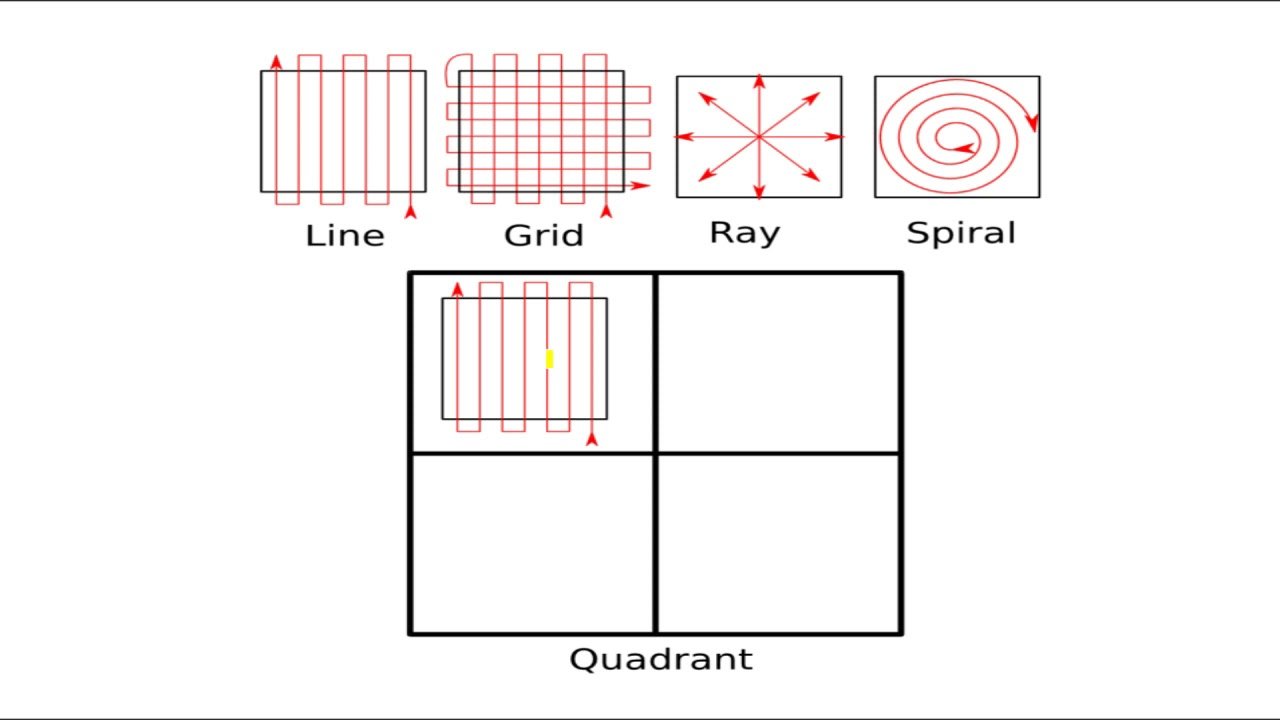
Four types of search patterns exist: linear, binary, jump, and hash. These patterns play a crucial role in various fields, including computer science and information retrieval. Understanding these search patterns can significantly enhance your efficiency in finding information. Let’s delve into each type and explore how they work in different scenarios. Whether you’re a student, researcher, or simply curious about search algorithms, mastering these patterns can elevate your search skills to the next level. Let’s uncover the power of what are four types of search patterns.

Understanding the Four Types of Search Patterns
What Are Four Types of Search Patterns
Welcome to our guide on understanding the various search patterns that people use every day! Have you ever wondered how you find information on the internet or locate your favorite toy in your messy room? Well, search patterns are like secret codes that help you navigate through all the information around you. In this article, we will explore four main types of search patterns that people commonly use. So, let’s dive in and uncover the secrets of searching!
The Keyword Search Pattern
One of the most common search patterns is the keyword search. Think of keywords as magical words that open the doors to a treasure trove of information. When you type a word or a phrase into a search engine like Google, you are using the keyword search pattern. Let’s say you want to learn about dinosaurs. You would type “dinosaurs” into the search bar, and voila! A whole world of dino facts appears before your eyes.
Keyword searches are like magic spells that help you summon the exact information you need. Whether you are looking for a recipe for chocolate chip cookies or researching your favorite animal, keywords are your best friends in the vast world of the internet.
Tips for Successful Keyword Searches:
- Be specific: Use keywords that accurately describe what you are looking for.
- Use quotation marks: If you are looking for a specific phrase, enclose it in quotation marks to get exact results.
- Experiment with synonyms: Sometimes, using different words for the same thing can lead you to new and exciting information.
The Question Search Pattern
Have you ever asked a question out loud and then turned to your favorite search engine for an answer? Congratulations! You just used the question search pattern. This type of search involves turning your thoughts into inquiries and letting the search engine do the rest.
For example, if you want to know “How do birds fly?” or “What is the capital of France?” you are using the question search pattern. Questions are powerful tools for seeking information because they prompt specific answers that address your curiosity.
Next time you have a burning question, remember that the internet is a vast library waiting to provide you with answers, thanks to the question search pattern.
Tips for Effective Question Searches:
- Be clear and concise: Formulate your question in a way that clearly conveys what you want to know.
- Avoid vague questions: Specific questions yield specific answers, so try to be as precise as possible.
- Use question words: Words like “what,” “how,” “why,” “where,” and “when” can help structure your questions effectively.
The Image Search Pattern
They say a picture is worth a thousand words, and the image search pattern proves this to be true. Sometimes words alone cannot express what you are looking for, and that’s where images come to the rescue. When you perform an image search, you are using visual cues to find information.
Imagine you see a beautiful flower on your walk and want to know its name. By snapping a picture and using an image search engine, you can quickly identify the flower species. From identifying landmarks to learning about different species of animals, the image search pattern opens up a whole new world of exploration.
Tips for Successful Image Searches:
- Use high-quality images: Clear and detailed images yield more accurate search results.
- Crop images if needed: Focus on the specific part of the image you want to search for better results.
- Use filters: Refine your image search by using filters such as size, color, or type.
The Voice Search Pattern
Welcome to the future, where you can search the web using just your voice! The voice search pattern is a convenient way to find information without typing a single word. By simply speaking into your device, you can search for anything from the latest weather updates to your favorite song lyrics.
Voice search technology has revolutionized the way we interact with search engines, making it easier and faster to access information on the go. Whether you’re cooking in the kitchen, driving in your car, or lounging on the couch, voice search is your personal assistant ready to help at a moment’s notice.
Tips for Effective Voice Searches:
- Speak clearly and slowly: Enunciate your words to ensure accurate transcription by the voice search technology.
- Avoid background noise: Find a quiet environment to improve the accuracy of voice recognition.
- Use specific commands: Start your voice search with phrases like “Hey Siri,” “Ok Google,” or “Hey Alexa” to activate voice search functions.
Search patterns are like keys that unlock the doors to a world of knowledge and information. By understanding and utilizing different search patterns such as keyword searches, question searches, image searches, and voice searches, you can navigate the digital landscape with ease.
So, next time you embark on a quest for information, remember the power of search patterns and choose the one that best suits your needs. Happy searching!
Thank you for reading our guide on the four types of search patterns. Stay curious, stay informed, and keep exploring!
Crime Scene Search Methods
Frequently Asked Questions
What is a grid search pattern?
A grid search pattern involves dividing the search area into a grid and systematically searching each grid cell, covering the entire area. This method is useful for thorough coverage of large areas and is commonly used in land-based search operations.
How does a spiral search pattern work?
In a spiral search pattern, the search starts at a central point, and searchers move outward in a spiral path, covering the area in a systematic manner. This type of search pattern is effective in locating a target that is likely to be located near the center of the search area.
What is an expanding square search pattern?
An expanding square search pattern involves starting from a designated point and moving in a square shape, gradually increasing the size of the square with each search pass. This pattern is suitable for quickly covering a large area and is often used in search and rescue operations.
How is a parallel search pattern executed?
In a parallel search pattern, searchers move in straight parallel lines along the search area, covering the ground methodically. This pattern is efficient for searching open areas such as fields or water bodies and is commonly utilized in aerial or marine search operations.
Final Thoughts
In conclusion, when it comes to conducting effective searches, understanding the four types of search patterns is crucial. Linear search involves scanning each item one by one until finding the desired result. Binary search utilizes dividing the search area in half at each step, significantly reducing search time. Jump search involves skipping ahead by fixed increments, ideal for large datasets. Lastly, interpolation search estimates the position of the target value based on the previous values searched. Mastery of these search patterns can greatly enhance search efficiency and accuracy.