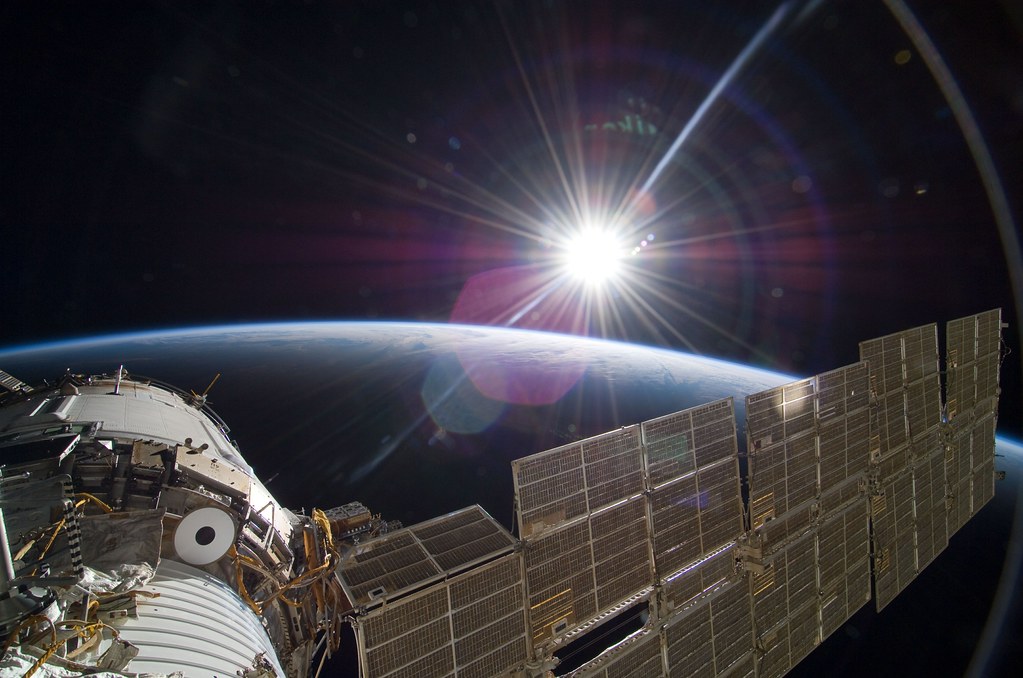
The Space Station Sun image showcases a remarkable alignment that captivates astronomy enthusiasts. This stunning view reveals the intricate dance between our planet and the cosmos.
What is the Space Station Sun image?
The Space Station Sun image captures a breathtaking moment when the International Space Station (ISS) transits in front of the Sun. This rare event allows observers to witness the vastness of space and the intricate details of our home planet’s orbiting laboratory.
During the transit, the ISS appears as a small silhouette moving swiftly across the bright solar disk. Photographers and space enthusiasts eagerly await such opportunities, as they offer a unique perspective rarely seen by the naked eye.
The image showcases not only the engineering marvel of the ISS but also highlights the delicate balance between technology and nature. It serves as a reminder of humanity’s achievements in space exploration and our continuous quest for knowledge beyond Earth.
Key features of the Space Station Sun image include:
- The sharp contrast between the dark silhouette of the ISS and the brilliant light of the Sun.
- The fleeting nature of the event, lasting only a few seconds.
- The potential for capturing stunning solar flares and sunspots in the background.
How was the image captured?
The breathtaking Space Station Sun image was captured using a combination of advanced technology and precise timing. The process required meticulous planning and coordination among various teams to ensure a successful shot. Here’s how it all came together:
- Preparation: Before the event, scientists and photographers analyzed the trajectory of the Space Station to predict when it would pass in front of the Sun.
- Equipment: High-resolution cameras equipped with specialized filters were set up to capture the moment without damaging the sensors from the intense sunlight.
- Timing: The exact moment of the Space Station’s transit was calculated down to the second, ensuring that every detail was captured perfectly.
- Execution: As the Space Station moved across the Sun, the cameras clicked in unison, creating a stunning visual that showcases the intricate details of both the spacecraft and the solar surface.
This captivating image is not just a testament to technological prowess but also a reminder of the beauty and wonder of our universe.
The significance of the Space Station’s path
The significance of the Space Station’s path cannot be overstated when discussing the stunning Space Station Sun image. As the International Space Station (ISS) orbits Earth at an altitude of approximately 400 kilometers, it travels at a remarkable speed of about 28,000 kilometers per hour. This unique trajectory allows the ISS to periodically align perfectly with the Sun from specific vantage points on the planet.
The precise timing and positioning are crucial, as even a slight deviation can mean the difference between capturing a breathtaking image and missing the moment entirely. Astronauts and scientists onboard the ISS have continually emphasized how these fleeting opportunities can provide invaluable insights into solar phenomena.
- Solar observations: The ISS’s path enables detailed studies of solar activity.
- Astronomic alignment: The alignment offers a rare perspective that enhances our understanding of the Universe.
- Public engagement: Images like the Space Station Sun image captivate the public’s imagination.
Overall, the ISS’s orbital path plays a pivotal role in the continual quest for knowledge about our Sun and beyond.
Viewing tips for celestial events
To fully appreciate the stunning Space Station Sun image, here are some essential viewing tips for celestial events that can enhance your experience:
- Choose a Clear Day: Look for days with minimal cloud cover. A clear sky provides the best view of solar events and allows for optimal photography.
- Use Proper Equipment: Binoculars or a telescope with a solar filter can help you see more details without damaging your eyes. Always prioritize safety when observing the Sun.
- Check Timing: Keep an eye on the schedule for celestial events involving the Space Station. Knowing when it will cross in front of the Sun can help you set up in advance.
- Find a Good Location: Position yourself in an area with an unobstructed view of the horizon. Elevated locations can offer a better vantage point.
- Be Patient: Celestial events can be fleeting. Take your time to observe and enjoy the moment as the Space Station moves across the Sun.
These tips can enhance your experience and ensure you capture the beauty of the Space Station Sun image.
By NASA Goddard Photo and Video via Openverse