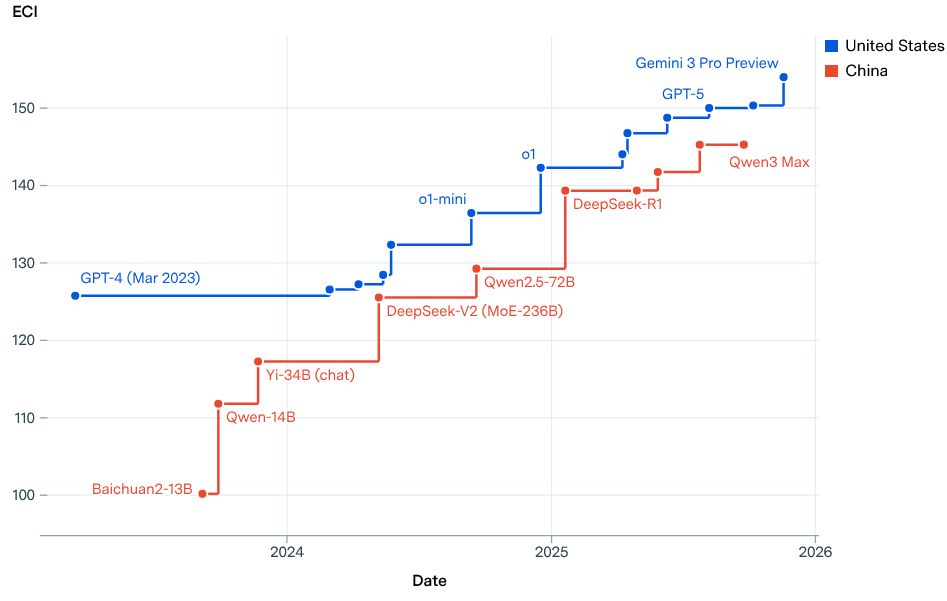
The AI model race is becoming increasingly competitive as companies strive to innovate and lead the market. Understanding the dynamics of this race is crucial for success.
Overview of the AI Model Race
The AI model race has become a defining competition in the tech industry, with companies vying to develop the most advanced artificial intelligence systems. As organizations invest heavily in research and development, the landscape is evolving rapidly, showcasing a variety of strategies that lead to success.
The stakes are high, and the winners of this race will not only gain market dominance but also have the potential to influence global technological trends. Major players, including established tech giants and innovative startups, are at the forefront of this competition, pushing the boundaries of what is possible with AI.
Key strategies that have emerged in the AI model race include:
- Investment in Talent: Attracting top researchers and engineers is crucial for developing cutting-edge models.
- Data Acquisition: Access to large, diverse datasets is essential for training effective AI systems.
- Collaboration: Partnerships with academic institutions and other tech companies can foster innovation and accelerate progress.
- Focus on Ethics: Addressing ethical considerations in AI development builds trust and compliance with regulations.
As the competition intensifies, the future of AI will depend on the strategies adopted by these key players.
Key Players in the AI Model Market
The AI model race has attracted numerous key players, each striving to establish dominance in this rapidly evolving market. These companies are investing heavily in research and development to create innovative solutions that cater to diverse needs.
Among the notable contenders are:
- OpenAI: Renowned for its advanced language models, OpenAI continues to push the boundaries of AI capabilities, focusing on ethical applications.
- Google DeepMind: With a legacy of groundbreaking research, DeepMind integrates AI technologies across various sectors, enhancing efficiency and performance.
- Microsoft: Leveraging partnerships and cloud services, Microsoft aims to democratize AI access, making powerful tools available to businesses of all sizes.
- Amazon Web Services (AWS): AWS offers a range of AI services, empowering developers to build and scale their models using robust infrastructure.
- Meta (formerly Facebook): Meta is focusing on AI advancements for social connectivity and content moderation, exploring new frontiers in user engagement.
As the AI model race intensifies, these players will continue to innovate and redefine the landscape, driving competition and progress in the field.
Recent Innovations in AI Technology
Recent innovations in AI technology are shaping the landscape of the AI model race, fostering competition among developers and researchers. The rapid advancements in machine learning algorithms and neural networks have led to remarkable breakthroughs that are revolutionizing various industries.
One notable innovation is the introduction of transformer architectures, which have significantly improved the performance of natural language processing tasks. These architectures allow for better context understanding, enabling AI models to generate more coherent and contextually relevant responses.
Moreover, transfer learning has emerged as a powerful technique, allowing models to leverage knowledge gained from one task to enhance performance on another. This approach not only accelerates the development process but also reduces the need for large datasets.
In addition to these technical advancements, there has been a surge in collaboration across sectors. Partnerships between academic institutions and tech companies are fostering a shared knowledge base that is critical in pushing the boundaries of what AI models can achieve.
As the AI model race continues to evolve, these innovations are setting the stage for the next generation of intelligent systems, promising impactful applications that will transform our daily lives.
Challenges Facing AI Developers
The rapid evolution of artificial intelligence has led to a competitive landscape filled with unique challenges for developers in the AI model race. As companies strive to create cutting-edge models, they face several hurdles that can impede progress and innovation.
- Data Privacy Concerns: With increasing scrutiny over data usage, developers must navigate complex regulations while ensuring that their AI models respect user privacy.
- Resource Constraints: Developing advanced AI models often requires substantial computational resources, which can be a barrier for smaller companies and startups.
- Talent Acquisition: The demand for skilled professionals in AI is surging, making it challenging for organizations to attract and retain top talent in this competitive field.
- Ethical Implications: As AI technologies become more integrated into daily life, developers must address ethical questions surrounding bias, transparency, and accountability in their models.
These challenges necessitate strategic thinking and adaptability among developers as they navigate the complexities of the AI model race. Success in this arena requires not only technical expertise but also a keen understanding of the broader implications of their innovations.
Future Trends in AI Models
The AI model race is evolving rapidly, with several future trends poised to shape the landscape of artificial intelligence in the coming years. As competition intensifies, developers and organizations are pivoting towards several key strategies to stay ahead.
- Increased Collaboration: Many companies are starting to partner with academic institutions and other tech firms, fostering a culture of innovation through shared resources and knowledge.
- Focus on Ethical AI: As the demand for transparency and fairness grows, developers are prioritizing ethical considerations in AI model creation, ensuring that algorithms are unbiased and responsible.
- Advancements in Natural Language Processing: The race is also marked by significant improvements in NLP, enabling AI models to understand and generate human-like text more effectively.
- Emphasis on Sustainability: Companies are exploring ways to make AI development more environmentally friendly, such as optimizing energy consumption in training large models.
As these trends unfold, they will not only influence the trajectory of the AI model race but also redefine how businesses leverage artificial intelligence to create impactful solutions.
How to Stay Competitive in AI
As the AI model race heats up, staying competitive requires strategic foresight and agile adaptation to emerging trends. Companies must prioritize the development of robust algorithms that can efficiently process and analyze vast amounts of data.
To remain at the forefront of this rapidly evolving landscape, organizations should consider the following strategies:
- Invest in Research and Development: Allocating resources to R&D can lead to groundbreaking advancements and innovative solutions that set a company apart from its competitors.
- Collaborate with Industry Leaders: Forming partnerships with other tech firms or academic institutions can foster knowledge sharing and accelerate the pace of innovation.
- Focus on Scalability: Developing AI models that can scale efficiently is crucial for meeting increasing demands and maintaining performance standards.
- Embrace Open Source: Engaging with open-source communities can enhance a company’s visibility and access to diverse talent and resources.
- Prioritize Ethical Considerations: Adhering to ethical guidelines in AI development can build trust and promote long-term sustainability in the market.
Implementing these strategies will be essential for success in the competitive AI model race.
AI Model Race: What to Expect
The AI model race is rapidly evolving, and industry experts predict significant changes in the coming months. As companies invest heavily in developing cutting-edge models, several key trends are expected to shape the landscape.
First, an emphasis on collaboration among tech giants and startups is likely to increase. By pooling resources and expertise, these entities can accelerate innovation and drive the development of more sophisticated AI solutions.
Second, the demand for ethical AI will grow. As the capabilities of AI models expand, concerns regarding bias and transparency will lead to stricter regulatory frameworks and a push for responsible AI practices.
Additionally, we may see a surge in specialization, with companies focusing on niche applications of AI technology. This could lead to the emergence of tailored models that cater to specific industries, such as healthcare or finance.
Lastly, the competition in the AI model race will intensify, resulting in faster iteration cycles and more frequent updates to existing models. As developers strive to stay ahead, the landscape will be marked by rapid advancements and innovative breakthroughs.
Case Studies of Successful AI Models
In the highly competitive AI model race, several case studies showcase successful strategies that have propelled companies to the forefront of innovation.
One notable example is OpenAI, which has consistently pushed the boundaries of natural language processing with its GPT series. By leveraging vast datasets and advanced algorithms, OpenAI developed models that excel in generating human-like text, significantly enhancing user experience in various applications.
Another case study is DeepMind, renowned for its breakthrough in reinforcement learning. The AI model known as AlphaGo defeated world champions in the game of Go, illustrating the potential of AI to tackle complex problems. This achievement has not only set benchmarks but has also inspired further research in areas such as healthcare and energy.
Additionally, Google has made significant strides with its BERT model, which improved search engine capabilities by understanding context and nuance in user queries. This advancement has revolutionized information retrieval, making it more intuitive for users.
These case studies highlight the importance of innovation, collaboration, and adaptability in the ongoing AI model race, providing valuable insights for aspiring developers and companies.
By Luke Emberson via Openverse